FREE shipping on orders over US$200
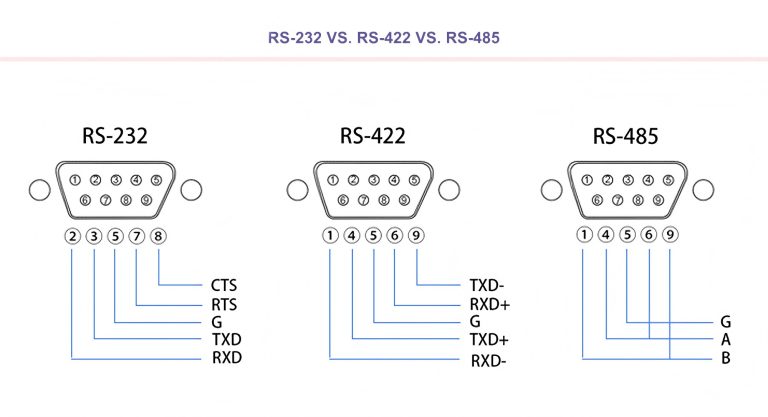
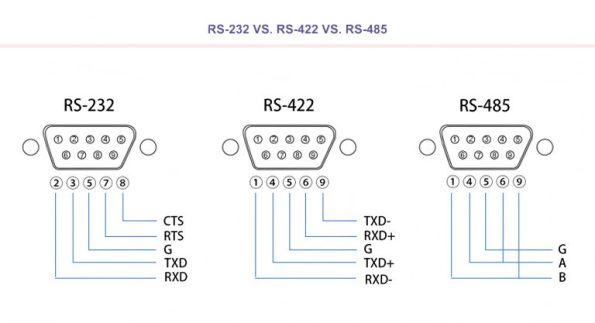
Serial communication may sound like a legacy technology, but RS-232, RS-422, and RS-485 are still widely used in industrial automation, access control systems, instrumentation, power monitoring, transportation systems, and embedded control networks.
In many industrial environments, these serial interfaces are required to transmit data over long distances, through areas with strong electromagnetic interference, or between equipment located in different buildings. In these cases, copper-based serial communication may face limitations such as signal degradation, ground loops, electrical noise, and limited transmission distance.
This is where fiber optic transmission becomes a practical solution. By converting RS-232, RS-422, or RS-485 electrical signals into optical signals, industrial systems can achieve longer transmission distance, stronger noise immunity, and better electrical isolation.
This article explains the differences between RS-232, RS-422, and RS-485, and how fiber optic solutions can improve industrial serial communication networks.
What Is RS-232?
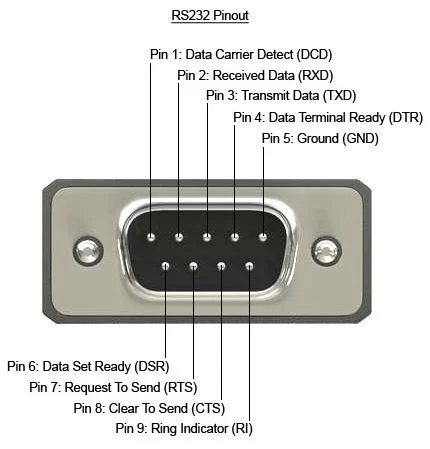
RS-232 is one of the oldest and most widely recognized serial communication standards. It is commonly used for point-to-point communication between a computer and a peripheral device, such as a modem, industrial controller, measurement instrument, or embedded system.
RS-232 uses single-ended signaling, which means the signal is measured relative to a common ground. Because of this design, RS-232 is relatively simple and easy to implement, but it is also more vulnerable to electrical noise and ground potential differences.
Key Features of RS-232
RS-232 is typically used for short-distance, point-to-point communication. It supports full-duplex communication, meaning data can be transmitted and received at the same time when separate transmit and receive lines are used.
However, RS-232 has several limitations:
- Short transmission distance, typically up to about 15 meters
- Lower data rate compared with RS-422 and RS-485
- Higher sensitivity to electromagnetic interference
- Single-ended signal transmission
- Not suitable for multi-drop network connections
Because of these limitations, RS-232 is commonly used inside control cabinets, between nearby devices, or for local configuration ports. For longer distances or noisy environments, RS-232 over fiber can be used to extend the communication link while providing electrical isolation.
What Is RS-422?
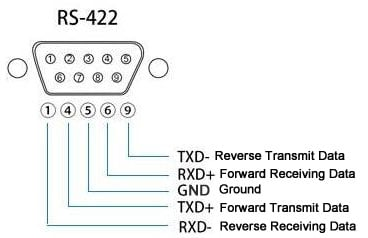
RS-422 is a balanced differential serial communication standard. Unlike RS-232, RS-422 uses differential signaling, where data is transmitted as the voltage difference between two wires. This improves noise immunity and allows longer transmission distances.
RS-422 typically uses separate pairs for transmitting and receiving data, which allows full-duplex communication. It is often used in industrial control systems, long-distance serial links, and applications where stable communication is required in electrically noisy environments.
Key Features of RS-422
RS-422 offers several advantages over RS-232:
- Differential signal transmission
- Longer transmission distance, typically up to 1200 meters under suitable conditions
- Higher noise immunity
- Full-duplex communication
- Higher data rates over short distances
- Support for one driver and multiple receivers
RS-422 is suitable for point-to-point or point-to-multipoint communication where one transmitting device communicates with multiple receiving devices. However, it is not normally used as a true multi-master bus system.
What Is RS-485?
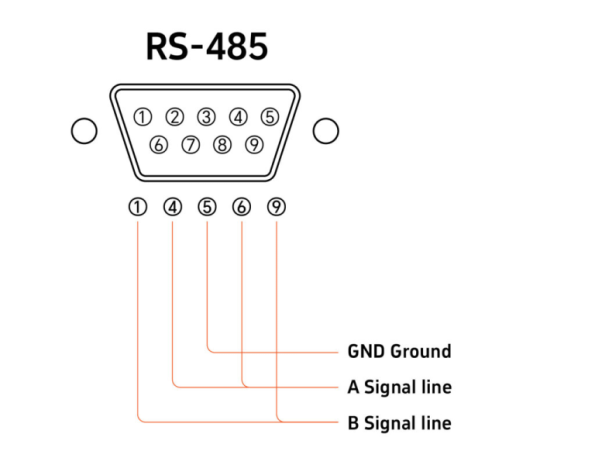
RS-485 is also based on balanced differential signaling, but it is designed for multi-drop communication. This makes it one of the most common serial communication standards in industrial automation.
RS-485 allows multiple devices to share the same communication bus. It is widely used in PLC systems, building automation, access control, energy meters, motor drives, sensors, and industrial data acquisition systems.
RS-485 commonly operates in half-duplex mode using one twisted pair, meaning devices share the same pair of wires for transmitting and receiving. Full-duplex RS-485 configurations are also possible when two pairs are used, but half-duplex RS-485 is more common in industrial fieldbus networks.
Key Features of RS-485
RS-485 is popular because it provides:
- Differential signal transmission
- Strong resistance to common-mode noise
- Multi-drop bus communication
- Long-distance transmission, typically up to 1200 meters under suitable conditions
- Support for multiple devices on the same bus
- Good performance in industrial environments
The actual number of devices on an RS-485 bus depends on the transceiver unit load, cable quality, termination, baud rate, and installation environment. Traditional RS-485 networks often support up to 32 unit loads, while modern low-load transceivers can support more devices.
RS-232 vs RS-422 vs RS-485 Comparison
| Feature | RS-232 | RS-422 | RS-485 |
|---|---|---|---|
| Signal Type | Single-ended | Differential | Differential |
| Typical Communication | Point-to-point | Point-to-point or point-to-multipoint | Multi-drop bus |
| Duplex Mode | Full-duplex | Full-duplex | Usually half-duplex; full-duplex possible |
| Typical Distance | Up to about 15 m | Up to about 1200 m | Up to about 1200 m |
| Noise Immunity | Low | High | High |
| Number of Devices | 1 transmitter and 1 receiver | 1 driver, multiple receivers | Multiple drivers and receivers |
| Common Applications | Local serial ports, instruments, configuration ports | Industrial control, long-distance serial links | Automation, access control, meters, PLC networks |
| Fiber Extension Need | Useful for isolation and long distance | Useful for longer distance and EMI protection | Very useful for industrial multi-drop networks and isolation |
Why Use Fiber Optic Transmission for Serial Communication?
Copper-based RS-232, RS-422, and RS-485 systems can work well in short and controlled environments. However, industrial sites often include high-voltage equipment, motors, inverters, relays, generators, welding machines, and long cable runs. These conditions can cause serious communication problems.
Fiber optic transmission solves many of these issues by converting electrical serial signals into optical signals.
1. Longer Transmission Distance
RS-232 is limited to short distances. RS-422 and RS-485 can reach much longer distances than RS-232, but they are still limited by cable quality, baud rate, grounding, and electromagnetic noise.
Fiber optic links can extend serial communication over much longer distances, from hundreds of meters to several kilometers, depending on the fiber type, optical module, and system design.
2. Strong Electromagnetic Interference Immunity
Fiber optic cables transmit data using light instead of electrical current. This makes them immune to electromagnetic interference and radio frequency interference.
For industrial environments with motors, frequency converters, high-voltage cables, or heavy machinery, fiber optic communication provides a much more stable transmission path than copper cabling.
3. Electrical Isolation
Copper cables can create ground loops when devices are located in different electrical grounding zones. Ground loops may cause communication errors, equipment damage, or unstable system behavior.
Fiber optic cables provide complete electrical isolation between devices. This is especially valuable in power plants, substations, railway systems, factory automation, and outdoor industrial networks.
4. Improved System Reliability
In industrial communication, reliability is more important than simple connectivity. Fiber optic transmission helps reduce downtime caused by electrical noise, lightning-induced surges, ground potential differences, and long-distance signal attenuation.
For mission-critical control and monitoring systems, serial-to-fiber conversion can significantly improve communication stability.
RS-232 over Fiber
RS-232 over fiber is commonly used when a short-distance RS-232 signal needs to be transmitted over a longer distance or through an electrically noisy area.
Typical applications include:
- Remote equipment configuration
- Industrial instruments
- CNC machines
- Control room to field device communication
- Medical or laboratory equipment
- Electrical isolation between two RS-232 devices
An RS-232 fiber optic converter converts RS-232 electrical signals into optical signals for transmission over fiber, then converts them back to RS-232 at the remote end.
This solution is especially useful when the original device only supports RS-232 and cannot be replaced with RS-422, RS-485, or Ethernet.
RS-422 over Fiber
RS-422 already provides better distance and noise immunity than RS-232, but fiber extension is still useful when longer distance, electrical isolation, or EMI immunity is required.
RS-422 over fiber is suitable for:
- Industrial automation systems
- Long-distance serial data links
- Transportation control systems
- Remote monitoring equipment
- Factory control networks
- Point-to-multipoint signal distribution
Because RS-422 supports full-duplex communication, RS-422 fiber optic transmission is often used in systems that require simultaneous data transmission and reception.
RS-485 over Fiber
RS-485 over fiber is widely used in industrial field networks. Since RS-485 is commonly deployed in multi-drop bus systems, fiber transmission can help extend the network across longer distances or isolate different sections of the system.
Typical RS-485 over fiber applications include:
- PLC communication
- Access control systems
- Building automation
- Energy monitoring systems
- Industrial sensors and meters
- Traffic control systems
- Power distribution monitoring
- Remote terminal units
In some installations, fiber converters are used to connect two RS-485 segments. In other systems, fiber is used as the backbone while RS-485 remains at the local device level.
This hybrid design allows engineers to combine the simplicity of RS-485 field wiring with the long-distance and high-reliability benefits of fiber optic transmission.
TTL Serial Signals and Optical Modules
TTL is not a serial communication standard like RS-232, RS-422, or RS-485. Instead, TTL refers to logic-level electrical signaling commonly used inside electronic circuits and embedded systems.
TTL-level UART signals are often found in microcontrollers, embedded boards, and industrial modules. These signals usually require conversion before they can be transmitted over long distances.
In optical communication systems, TTL-compatible optical modules, such as 1×9 optical transceiver modules, can be used in specific designs where electrical logic signals are converted into optical signals. These modules are often used in industrial communication equipment, serial fiber converters, and embedded optical transmission systems.
When selecting a TTL optical module or serial fiber solution, engineers should confirm the following parameters:
- Operating wavelength
- Fiber type
- Transmission distance
- Data rate
- Optical output power
- Receiver sensitivity
- Connector type
- Operating temperature
- Power supply voltage
- Compatibility with the system interface
When Should You Use Fiber Instead of Copper?
Fiber optic transmission is recommended when serial communication systems face one or more of the following conditions:
- Transmission distance exceeds the practical limit of copper cabling
- The site has strong electromagnetic interference
- Devices are located in different buildings or grounding zones
- Ground loops cause unstable communication
- Lightning or surge protection is required
- Industrial equipment requires high communication reliability
- RS-485 networks need to be extended across long distances
- Electrical isolation is required for safety or system protection
For short indoor connections, copper serial cables may be sufficient. For industrial, outdoor, high-voltage, or long-distance applications, fiber is usually the more reliable solution.
How to Choose the Right Serial Fiber Solution
When choosing an RS-232, RS-422, or RS-485 fiber optic transmission solution, consider the following factors.
Interface Type
Confirm whether the equipment uses RS-232, RS-422, RS-485, or TTL-level UART signals. These interfaces are not directly interchangeable without proper conversion.
Duplex Mode
RS-232 and RS-422 usually support full-duplex communication. RS-485 is commonly half-duplex, although full-duplex RS-485 is also possible in some systems.
Network Topology
RS-232 is usually point-to-point. RS-422 can support one driver and multiple receivers. RS-485 supports multi-drop bus communication.
The fiber solution should match the topology of the existing system.
Transmission Distance
Choose the proper optical module, fiber type, and converter according to the required distance. Multimode fiber is commonly used for shorter industrial links, while single mode fiber is suitable for longer distances.
Environment
For harsh industrial environments, consider operating temperature, enclosure protection, surge protection, power input range, and mounting method.
Connector and Fiber Type
Common fiber connector options include SC, ST, FC, and LC. The correct connector and fiber type should be selected according to the existing cabling infrastructure.
Common Applications of Serial over Fiber
Serial over fiber solutions are used in many industrial and commercial systems, including:
- Factory automation
- Power substations
- Intelligent transportation systems
- Railway communication
- Oil and gas monitoring
- Access control systems
- Security and surveillance systems
- Building automation
- Environmental monitoring
- Remote data acquisition
- Industrial control networks
These applications often require reliable long-distance communication in environments where copper cables may not perform well.
Conclusion
RS-232, RS-422, and RS-485 remain important communication interfaces in industrial systems. RS-232 is simple and suitable for short-distance point-to-point communication. RS-422 provides differential signaling and full-duplex transmission for longer and more reliable links. RS-485 is ideal for multi-drop industrial networks and is widely used in automation and monitoring systems.
However, when transmission distance, electromagnetic interference, grounding issues, or system reliability become critical, copper serial communication may not be enough. Fiber optic transmission provides a practical way to extend RS-232, RS-422, and RS-485 communication while improving noise immunity and electrical isolation.
For industrial communication systems, serial-to-fiber converters and TTL-compatible optical modules can help build stable, long-distance, and interference-resistant data links.
Fiber-Life provides fiber optic components and optical transmission solutions for industrial communication, data networks, and embedded optical systems. If you need support for serial over fiber applications, optical modules, or customized fiber optic transmission solutions, please contact our team for technical assistance.